
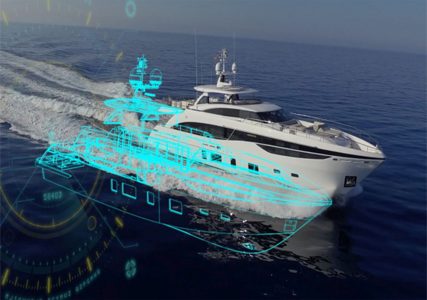
Marine engineering covers an enormous range — commercial vessels, naval platforms, offshore structures, recreational craft. The common thread is multi-physics: hydrodynamics, structural integrity, propulsion and on-board systems, all coupled, all evaluated against demanding classification and regulatory regimes. DDSPLM helps shipbuilders and offshore operators bring that complexity under one validated, configuration-controlled engineering process.
Forces reshaping marine programmes
- Decarbonisation and efficiency rules. IMO efficiency and emissions targets put hull optimisation and alternative propulsion at the centre of new designs.
- Hybrid and electric drivelines. Batteries and electric propulsion bring automotive-style electro-thermal problems into the engine room.
- Class-society scrutiny. Structural compliance increasingly leans on simulation evidence, which only holds up with traceable models.
- Long-life assets, sparse data. Refit and life-extension work routinely begins with reverse engineering of vessels designed before modern CAD.
Capabilities
- Hull and structural design in NX with surfacing for complex hull forms.
- Hydrodynamic CFD — resistance, seakeeping, manoeuvring — with Simcenter STAR-CCM+.
- Structural FEA including ultimate-strength and fatigue analyses on hull primary structure.
- Propulsion-system simulation — Amesim 1D models for diesel, hybrid and electric drivelines.
- PLM with Teamcenter for configuration-controlled programmes.
Common projects
- CFD validation of hull-form variants against fuel-efficiency targets.
- Structural compliance analyses for class-society review.
- Slamming, sloshing, and seakeeping studies.
- Reverse engineering of legacy vessels for refit programmes.