
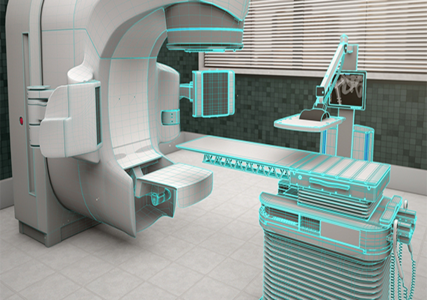
Medical-device engineering is unusually constrained — every design decision has to be defensible against FDA / CE / regulatory review, and every change has to be tracked back to its rationale. Engineering tooling has to support traceability as a first-class concern, not as an afterthought. DDSPLM helps device makers meet that bar without compromising on engineering velocity.
What makes this sector hard
- Traceability is the product, almost. A design-history file that can’t link every revision to a need is a regulatory liability, regardless of how good the device is.
- Patient-contact physics. Soft-tissue interaction, fluid-structure coupling and implant fatigue need simulation that general-purpose FEA rarely covers out of the box.
- Mixed disciplines, miniaturised. Mechanical, electronic and increasingly software content share shrinking volumes, forcing tight cross-domain coordination.
- India’s med-tech is scaling. Domestic manufacturing and R&D are growing fast, and new entrants need compliance-grade process discipline from the outset.
Capabilities
- Mechanical and biomechanical design in NX, with surfacing for organic geometries and sheet-metal for housings.
- Biomechanical simulation — soft-tissue contact, fluid-structure interaction, implant mechanics.
- Reliability analysis — fatigue, drop, sterilisation thermal cycles.
- Packaging validation for transit, storage and shelf life.
- Teamcenter PLM with the configurations needed for design-history-file traceability and compliance reporting.
Why customers pick us for this sector
We’ve supported customers building Class II and Class III devices, where the bar for design-history-file rigour is unforgiving. Our deployments are configured for the change-control discipline these programmes require — every ECO traceable to a need, every revision tied to a rationale — so the audit trail is a by-product of the workflow, not a scramble before review.